
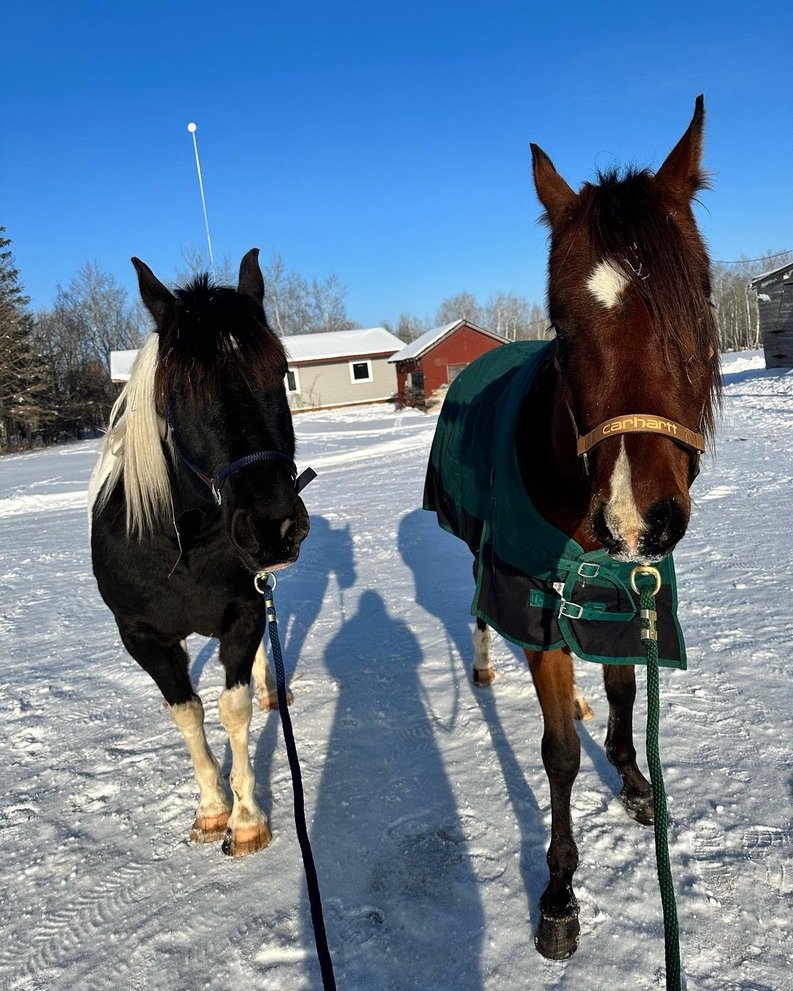
When the temperatures drop, should we be reaching for our horses’ blankets, or are they perfectly comfortable without them?
If you live somewhere like Manitoba, you know winter isn’t something we take lightly.
We’re talking freezing temperatures, howling winds, blowing snow, and those lovely mornings when you step outside and immediately question why you live somewhere that hurts your face.
While we’re bundled up in winter coats, scarves, mittens, and boots, our horses are standing outside completely unbothered.
And naturally, as horse owners, we start wondering: Should they be wearing blankets?
It’s a question that comes up every winter, and depending on who you ask, you’ll probably get a different answer.
Some horse owners swear by blanketing. Others believe horses are perfectly capable of handling the cold on their own.
So who’s right?
Well, as with most things involving horses, the answer isn’t quite that simple.
Horses Are Built For Cold Weather
One of the most interesting things about horses is how well their bodies can adapt to colder temperatures.
As the days get shorter, horses naturally begin growing thicker winter coats. These coats aren’t just extra hair. They provide insulation by trapping warm air close to the horse’s body.
When a horse’s winter coat is dry and fluffy, it can be surprisingly effective at keeping them warm.
You may have noticed how horses sometimes look extra fluffy during winter. Their hair can stand up slightly, which helps trap warm air against their bodies.
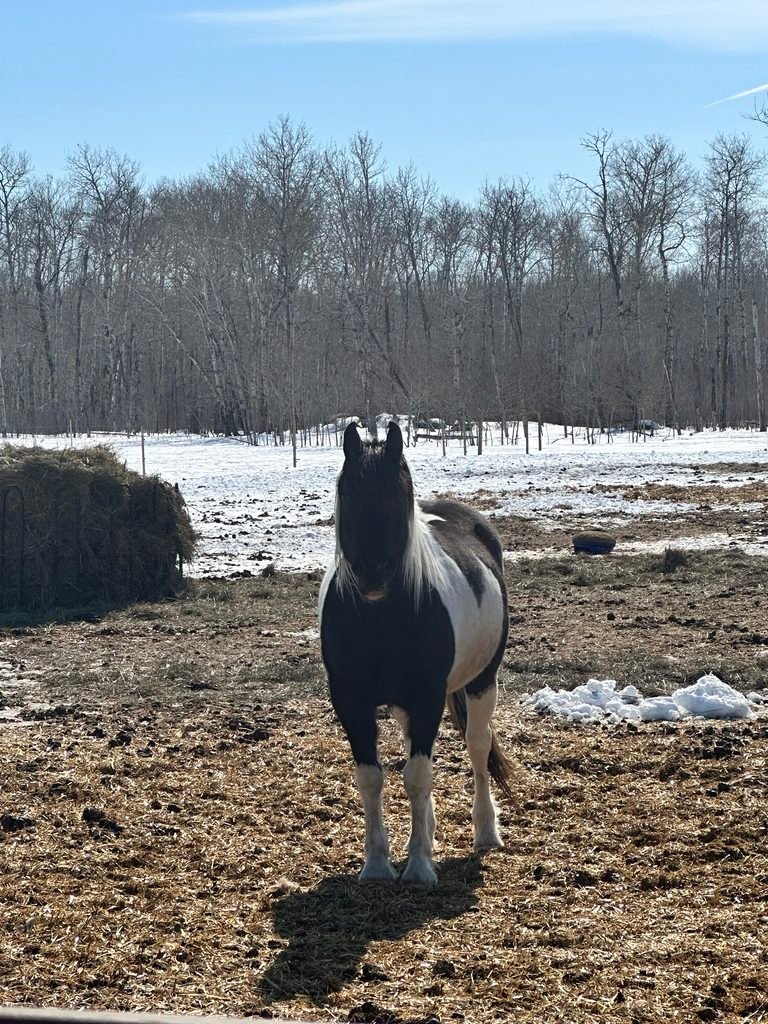
Horses also generate heat through digestion, particularly when eating hay and other forage.
This is one reason making sure horses have enough good-quality hay during winter is so important.
Of course, not every horse handles winter the same way. Age, health, body condition, coat thickness, and living conditions all play a role.
When Does A Horse Actually Need A Blanket?
Not every horse needs a blanket just because the temperature falls below freezing.
A healthy horse with a thick coat, proper nutrition, and access to shelter may be perfectly comfortable without one, even in temperatures that would send most of us running back inside.
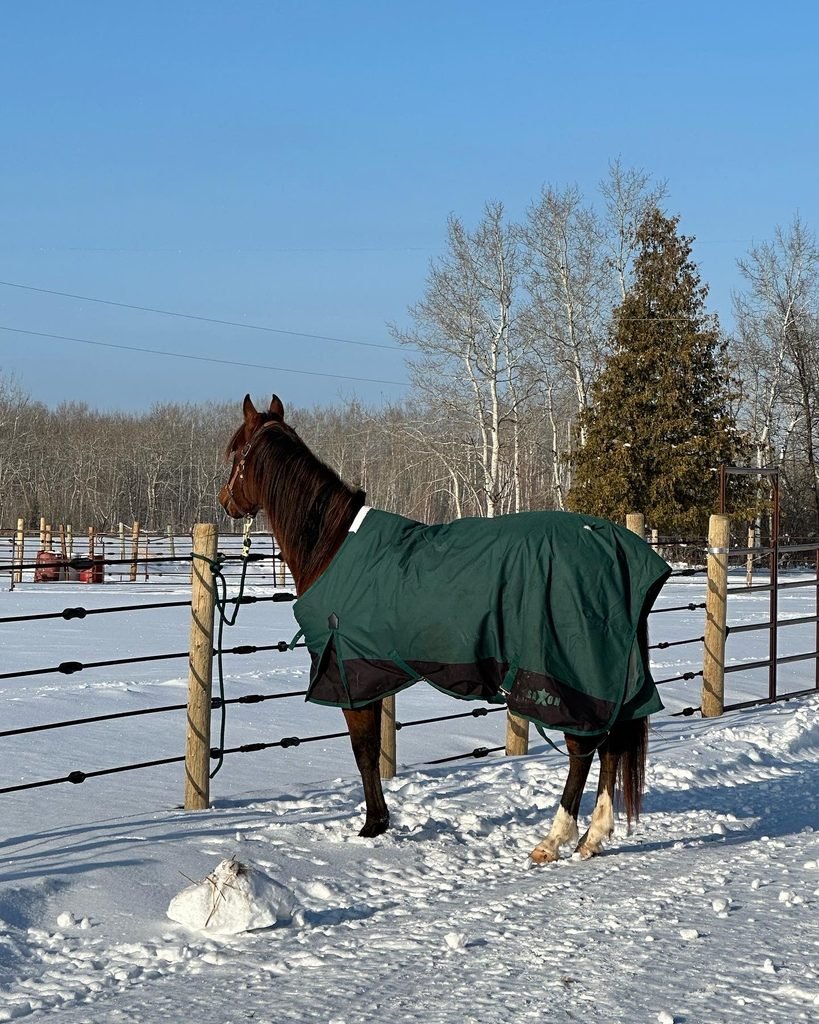
However, there are situations where a blanket may be beneficial or even necessary.
- Older Horses
As horses age, some have a harder time maintaining their weight and regulating their body temperature.
Senior horses who are thin, have health concerns, or struggle to stay warm may benefit from extra protection.
That doesn’t mean every older horse automatically needs a blanket, but it’s something worth paying closer attention to.
- Horses With Thin Coats
Some horses naturally grow thicker winter coats than others.
Horses that have been clipped, recently moved from warmer climates, or haven’t had time to adjust to winter may need additional protection.
A clipped horse, in particular, has lost some of the natural insulation it would normally rely on.
- Extreme Cold And Wind
Here in Manitoba, we know that temperature is only part of the story.
There’s cold, and then there’s Manitoba cold.
A calm sunny winter day can feel very different from a day with strong winds and blowing snow.
Wind can make it more difficult for horses to retain warmth, especially when they don’t have adequate shelter.
Horses exposed to extreme cold without enough protection may need blanketing, additional shelter, or both.
- Wet Weather
One of the biggest problems for a horse’s natural winter coat isn’t necessarily snow.
It’s moisture.
A thick, dry winter coat traps air and helps retain warmth. When that coat becomes soaked or matted down, its insulating ability decreases.
Cold rain, freezing rain, and wet conditions can be especially challenging.
A properly fitted waterproof turnout blanket can help protect horses when conditions call for it.
- Horses That Have Trouble Maintaining Weight
A horse that is underweight has fewer energy reserves to help it cope with cold weather.
These horses may need additional calories, shelter, and possibly a blanket to help conserve body heat.
It’s important to look at the whole picture rather than simply relying on a blanket to solve the problem.
Can Blanketing A Horse Actually Make Things Worse?
Believe it or not, yes.
Blanketing isn’t always better.
Putting a heavy blanket on a horse that doesn’t need one can cause overheating and sweating.
A damp, sweaty horse underneath a blanket isn’t necessarily a comfortable horse.
An improperly fitted blanket can also rub against the shoulders, chest, or withers and cause discomfort or sores.
A poorly secured blanket can also become a safety hazard if the straps come loose or get caught on something.
Blankets need to be checked regularly especially on horses that live outdoors.
Ideally, blankets should be removed daily to check the horse’s coat, skin, and body condition.
A blanket would be helping your horse stay comfortable, not creating a new problem.
How Can You Tell If Your Horse Is Cold?
Since horses can’t exactly walk up and ask for another layer, we have to pay attention to their behaviour and physical condition.
Some signs a horse may be struggling with the cold include:
- Shivering, especially if it continues
- Standing hunched or persistently tucked up
- Unusual lethargy or reluctance to move
- Seeking shelter more than usual
- Losing weight or struggling to maintain body condition
Of course, horses sometimes stand with their backs to the wind or seek shelter simply because it’s more comfortable.
The important thing is recognizing what is normal for your particular horse.
Feeling a horse’s ears or nose isn’t always a reliable way to tell whether they’re cold. Looking at their overall behaviour, body condition, and comfort is much more useful.
If your horse is persistently shivering, seems weak, or is behaving unusually, move them somewhere sheltered and contact your veterinarian.
What About Horses Living Outside All Winter?
Horses can live outdoors throughout the winter, provided their needs are being met.
A few important things matter more than whether they’re wearing a blanket.
Shelter: Horses need somewhere to escape the harsh wind and precipitation, whether that’s a suitable run-in shelter or another effective windbreak.
Hay: Adequate forage helps provide the energy horses need to maintain body temperature. Some horses need additional hay during especially cold weather.
Fresh water: Horses still need plenty of water during winter. Snow isn’t a reliable replacement for drinking water.
Body condition: Keeping an eye on weight is important, especially when thick winter coats can hide weight loss.
Daily checks: Even horses that seem perfectly happy outdoors should be checked regularly for injuries, illness, and signs of cold stress.
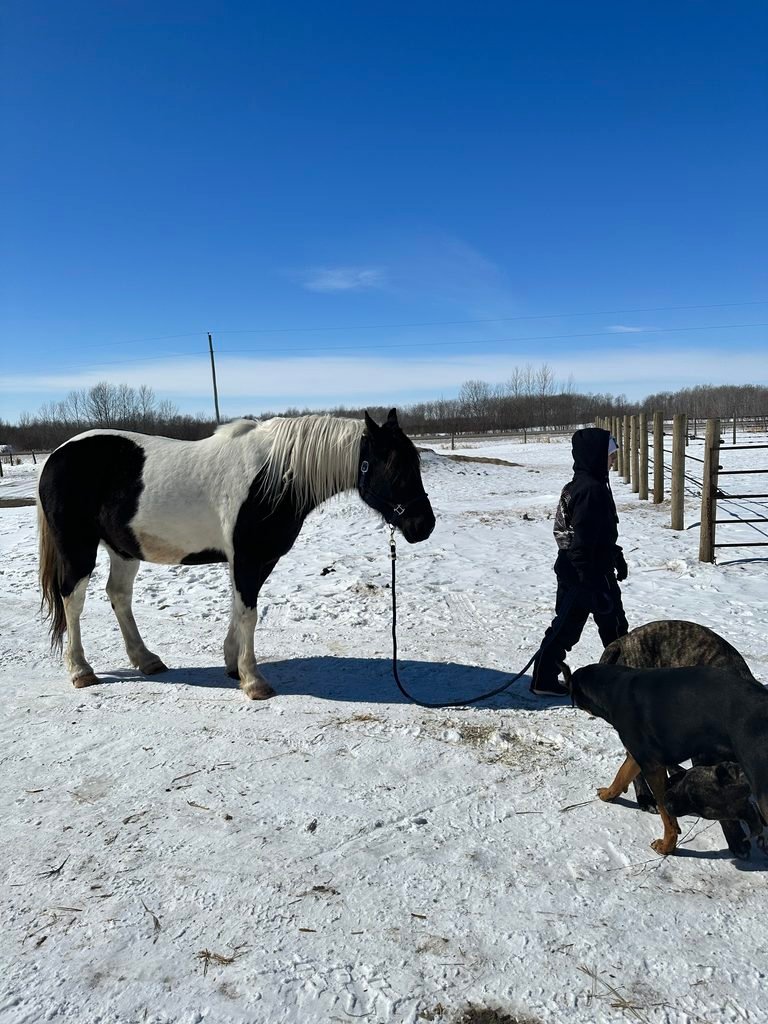
A blanket can be a useful tool, but it doesn’t replace good winter care.
Two Horses, Two Very Different Winter Needs: Apollo and Finn
If there’s one thing owning Apollo and Finn has taught me, it’s that even horses living in the same environment can have completely different needs when winter arrives.
Take Finn, for example.
Finn is our big draft cross, and when winter rolls around, he grows a thick winter coat that seems perfectly suited for Manitoba weather.
Most of the time, Finn doesn’t need a blanket. Between his size, his winter coat, and his ability to handle the cold, he’s usually quite comfortable without one.
That doesn’t mean we never blanket him though.
Apollo, our Arabian gelding, is a completely different story.
He’s had a harder time keeping weight on, and we’ve noticed he tends to get cold much faster than Finn.
Because of that, we generally start blanketing Apollo when the temperatures drop below -25 C.
I’ve sometimes wondered whether being an Arabian has something to do with it.
Arabians can certainly grow protective winter coats, just like other breeds. But horses have different builds, body conditions, and individual tolerances for cold weather.
In Apollo’s case, his difficulty maintaining weight is an important consideration.
And honestly, that’s one of the biggest lessons here.
Two horses. Same barn. Same Manitoba winters. Two completely different approaches to blanketing.
We don’t blanket Finn just because Apollo needs one, and we don’t leave Apollo without a blanket simply because Finn is comfortable.
Those temperatures aren’t rules we would apply to every horse either. They’re simply the guidelines we’ve developed from knowing our two boys. Wind, moisture, and how they’re coping with the weather can change our decisions.
Because at the end of the day, it’s not about whether every horse should wear a blanket. It’s about whether your horse needs one.
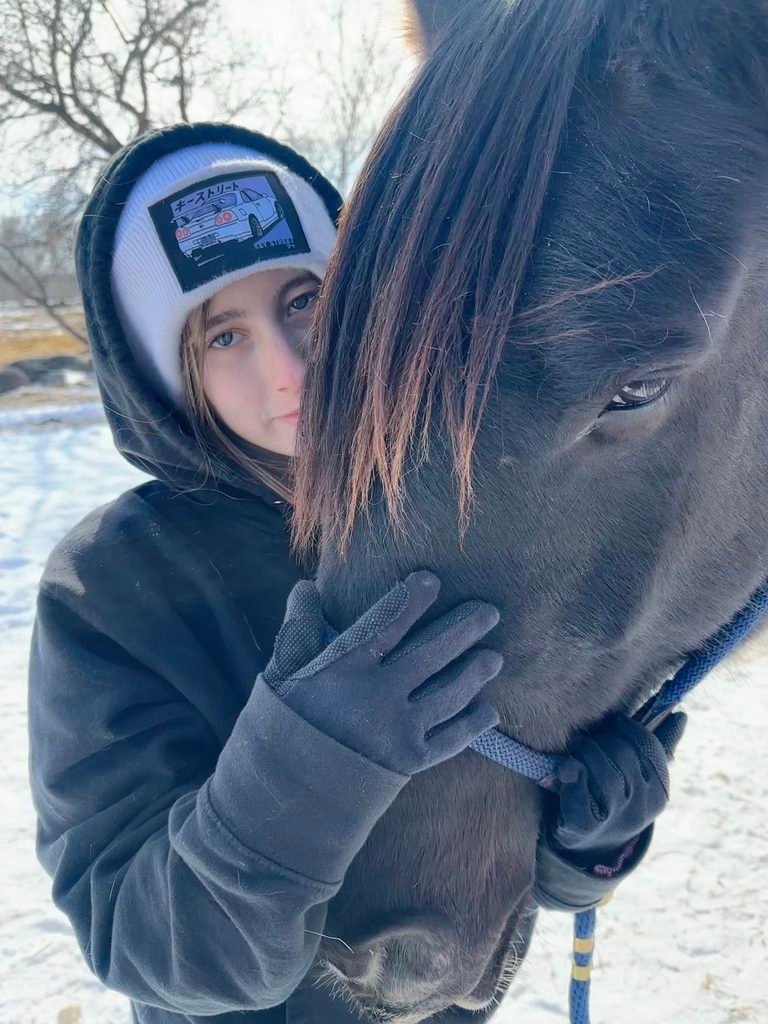
What About Staying Outside During Manitoba Winters?
Apollo and Finn spend most of their time outdoors throughout the winter, and honestly , that’s something I love about where we board them.
They’re able to enjoy the fresh air, move around, and grow their natural winter coats.
Of course, Manitoba weather doesn’t always cooperate.
When temperatures become dangerously cold or a winter storm rolls in, the barn will bring the horses inside overnight to keep them safe and comfortable.
Otherwise, they’re generally outside.
That’s perfectly normal for horses that are accustomed to winter conditions and have appropriate shelter, food, and water.
For us, winter care isn’t just about whether the horses are wearing blankets. It’s also about knowing they’re being monitored and that there’s a plan when the weather takes a turn for the worse.
And if you’ve ever experienced a Manitoba winter, you know just how quickly that can happen!
Having a barn that pays attention to changing weather conditions gives us peace of mind, especially on those bitterly cold winter nights.
So, Should You Blanket Your Horse?
The biggest thing I’ve learned about horses is that there isn’t a one-size-fits-all answer for everything.
What works for one horse might not work for another.
A healthy horse with a thick winter coat and proper shelter might be completely happy standing outside on a snowy January afternoon.
Another horse might benefit from a little extra protection.
And that’s okay.
Our job as horse owners isn’t necessarily to make our horses as warm as we would want to be.
It’s to understand what they need to stay healthy and comfortable.
Because while we’re standing at the fence freezing our fingers off, wondering whether they’re cold, there’s a good chance they’re wondering why we’re making such a fuss.
After all, they grew their winter coats for a reason.
So whether you choose to blanket your horse or not, the most important thing is knowing your horse.
Pay attention to their body condition, living environment, age, and overall health.
Don’t make the decision based only on a number on the thermometer or what other horse owners are doing.
Finn and Apollo are perfect examples of why individual care matters so much.
One grows a thick winter coat and handles most of what Manitoba throws at him. The other needs a little extra help when those temperatures start dropping.
Neither approach is wrong.
Every horse is different, and winter care should reflect that.
And really, isn’t that part of what makes owning horses such a learning experience? Just when you think you’ve figured something out, one of them reminds you that they’re all individuals.
Now I’m curious: Do you blanket your horses during winter, or do you let their natural winter coats do the work?
I’d love to hear what works for your horses, especially from fellow Canadian horse owners dealing with our famously unpredictable winters!
Life Between Horses – Because life is better with a little hay in your hair.
Disclaimer: This article shares general horse-care information and personal experience. Blanketing decisions should reflect each horse’s health, body condition, and living environment.
Consult your veterinarian if your horse is struggling with cold weather, losing weight, or showing signs of illness.